LAND INVESTMENT IN TANZANIA
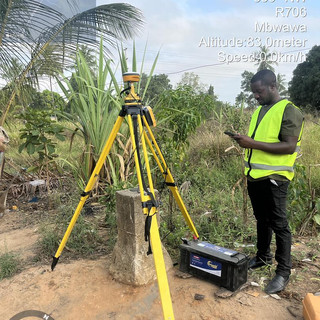
Hellow...!! Fellow Surveyors, Business men and Investors, Investing in land needs smartness
and strategic move.
Today we are going to scratch through 3 Reasons Why People Should
Invest in Land.
1. Land Doesn’t Depreciate
Unlike cars or gadgets, land doesn’t lose value—it appreciates over time. The more
development around it, the more valuable it becomes. Buying land today means
securing tomorrow’s wealth.
2. It’s a Tangible Asset You Can Trust
Land is real. You can see it, touch it, and it doesn’t vanish overnight. In uncertain
economic times, having physical assets like land gives you security and peace of
mind.
3. Low Maintenance, High Returns
Land requires little to no maintenance, yet has the potential for high returns—either
through resale, leasing, or future development. It’s a perfect passive investment.
So now, let’s see Why People Should Invest in Tanzania land. This is the core purpose of this write-up.
Investing in land in Tanzania in 2026 is a strategic move, as the country is currently
undergoing a significant economic transformation. With a projected GDP growth of 6.3%
this year, the "land of Kilimanjaro" has become one of Africa's most attractive investment
destinations.
Here are three primary reasons why you should consider investing in Tanzanian land today:
1. Massive Infrastructure and "Vision 2050" Momentum
Tanzania is currently rolling out large-scale infrastructure projects that are directly increasing the value of surrounding land.
Standard Gauge Railway (SGR): The connection between Dar es Salaam and
Dodoma is already operational, and extensions toward neighbouring landlocked
countries like Burundi and Rwanda are turning inland towns into major logistics hubs.
New Capital Development: As the government fully migrates to Dodoma, the
demand for residential and commercial land in the capital is skyrocketing.
Strategic Gateways: Projects like the Bagamoyo Port and the Msalato
International Airport are creating "high-growth corridors" where land bought today
is expected to appreciate significantly as these facilities reach full capacity.
2. High Demand Driven by Rapid Urbanization
Tanzania has one of the fastest-growing populations in the world, with over 67 million
people.
Housing Deficit: There is an estimated shortage of over 3 million housing units,
which grows by 200,000 units annually. This makes "buy-and-hold" strategies for
residential plots or developing affordable housing highly profitable.
Commercial Hubs: Cities like Dar es Salaam, Mwanza, Arusha, Mbeya, and
Dodoma are expanding at an incredible rate. As the urban population is expected to
double by 2050, peri-urban land (land on the outskirts of cities) is rapidly being
absorbed into the city limits, offering massive capital gains for early investors.
3. Favourable Investment Climate and Security
The Tanzanian government has introduced reforms to make land investment safer and more
transparent for both locals and foreigners.
TIC Derivative Titles: While land is technically owned by the state, foreign
investors can secure 99-year leases through the Tanzania Investment Centre (TIC).
This provides long-term security similar to ownership.
Zanzibar Incentives: If you are looking at the islands, Zanzibar offers a very
investor-friendly framework, allowing foreigners to buy villas and apartments with
linked residency permits and attractive tax breaks.
Political Stability: Tanzania remains one of the most stable countries in Africa,
providing a "safe haven" for capital compared to more volatile regions.
Important Note for Foreign Investors: Foreigners cannot own land "freehold" (forever) or
for private use on the mainland; it must be for investment purposes (like agriculture,
industry, or real estate development) and is typically managed through the TIC.
For local Tanzanian investors, the process of investing in land is significantly more
straightforward and flexible than it is for foreigners. Since 2026, the government has further digitalized these processes to encourage local ownership.
Here is a brief breakdown of how a local investor can acquire and secure land:
1. Identify the Category of Land
Tanzanian law divides land into three categories. As a local, your path depends on where the
land sits:
General Land: Located in urban or "surveyed" areas. This is the most secure for
investment as it comes with a Granted Right of Occupancy (Title Deed) for up to 99
years.
Village Land: Managed by Village Councils. Locals can acquire this through a
Customary Right of Occupancy (CCRO). It is often cheaper but may require
"conversion" to General Land if you plan large-scale commercial development.
Reserved Land: Includes National Parks and forests. This is strictly off-limits for
private investment.
2. Digital Verification (Tausi Portal)
In 2026, the primary tool for local investors is the Tausi Portal.
Verification: You use your NIDA (National ID) to log in and verify if a plot is
legitimate.
Avoid Scams: This system allows you to check if the seller is the actual owner and if
the land has any "encumbrances" (like being used as bank collateral).
3. The 5-Step Acquisition Process
If you are buying from an individual or the government, the steps are generally as follows:
1. Site Visit & Survey: Physically visit the land and hire a licensed surveyor to confirm
the boundaries match the official map. (I am a registered surveyor and am providing
this service. In case you need it get the contacts on my profile page there).
2. Sale Agreement: Draft a contract. For legal protection, this must be witnessed by a
lawyer and, in many cases, requires "Spousal Consent" (if the seller is married) to
prevent future family disputes.
3. Local Approvals: Obtain a "Letter of Offer" from the District Land Office or
approval from the Village Council.
4. Payment of Fees: Pay the Stamp Duty (typically 1% of the value) and Registration
Fees (around 0.25%) to the Tanzania Revenue Authority (TRA).
5. Title Transfer: Submit the documents to the Ministry of Lands to have the
Certificate of Occupancy transferred into your name.
4. Direct Government "Plots for Sale"
The government frequently surveys and sells plots directly to citizens. Locals can apply for
these through the Ministry of Lands or TAMISEMI portals, often paying in instalment's.
This is a popular way for first-time investors to get "clean" land without the risk of ownership disputes.


Comments